
Written & reviewed by Cory B., founder of NappyTi.me
Researched and fact-checked against peer-reviewed sleep studies, government health agencies (NIH, CDC), and established medical references (AASM, Sleep Foundation). Educational content — not a substitute for professional medical advice. See our editorial policy and methodology.
Why Sleep Drains You: The Real Reasons You Wake Up Tired
This guide is written for educational purposes using published sleep research and major medical references where possible. It is not medical advice. Review our editorial standards.
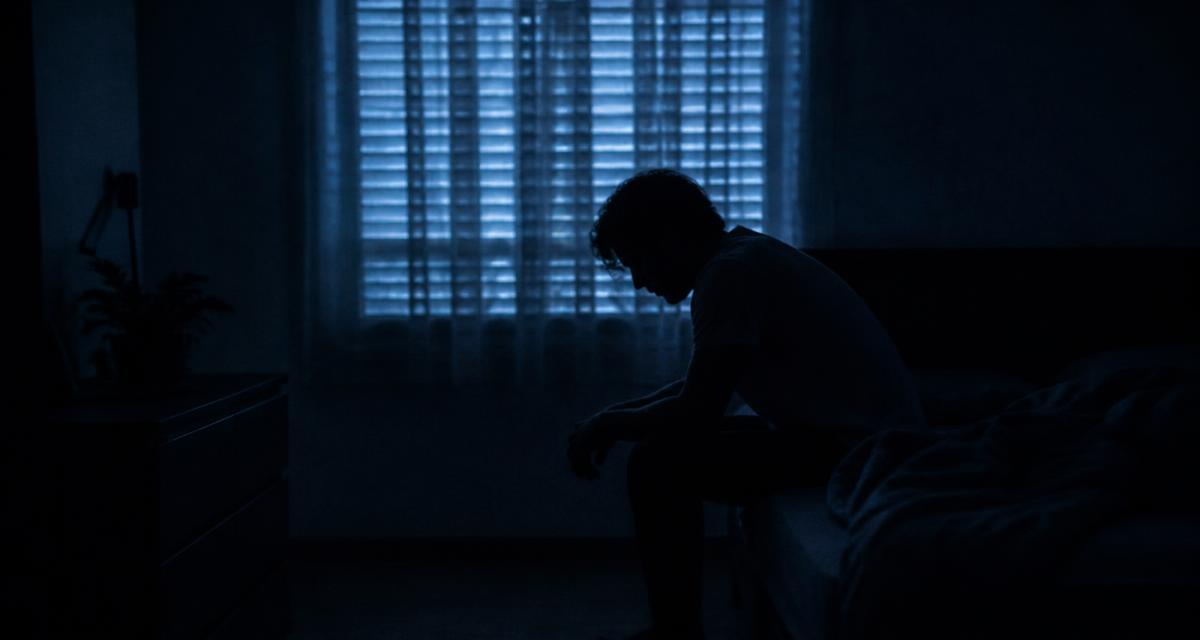
There is a specific kind of tired that has nothing to do with how long you were in bed. You went down at eleven. You got up at seven. On paper that is eight hours — the number everyone tells you to hit. And yet you spend the first ninety minutes of the day feeling like you are dragging a filing cabinet behind you, reaching for coffee before you have even finished a sentence out loud.
This guide is about that gap: why time in bed and feeling rested come apart, and what is actually happening in the hours you were unconscious. It is the single most common question we get through the contact form, and the honest answer is that "you need more sleep" is usually the wrong diagnosis. Most people who wake up drained are not short on hours. They are short on consolidated, correctly-timed, uninterrupted hours — which is a different problem with a different fix.
Tiredness is not one thing — it is two systems arguing
The most useful mental model in all of sleep science is also the oldest one still in active use: Alexander Borbély's two-process model, published in 1982 and still the backbone of how researchers talk about sleepiness today. It says your urge to sleep is the product of two independent systems that happen to overlap.
Process S — sleep pressure. From the moment you wake, your brain begins accumulating adenosine, a by-product of the cellular energy cycle. Adenosine binds to receptors that dampen arousal, and the longer you are awake, the more of it builds up. This is a chemical hourglass. It is also exactly what caffeine interferes with: caffeine does not create energy, it plugs the adenosine receptors so the pressure signal cannot be read. The adenosine is still there. When the caffeine clears, you feel it all at once.
Process C — the circadian alerting signal. Independently of how tired you are, an internal 24-hour clock in the hypothalamus pushes an alertness wave that peaks in the early evening and bottoms out around 4am. This is why you can pull an all-nighter and feel better at 8am than you did at 4am despite being awake three hours longer. Sleep pressure kept climbing; the circadian signal came back up and masked it.
What you experience as "energy" is the vertical distance between those two lines. That single insight explains most of the confusing parts of ordinary daily fatigue — the 2pm slump that arrives whether or not you ate lunch, the second wind at 10pm that makes going to bed feel absurd, and the fact that a nap at the wrong hour can leave you groggier than no nap at all.
Reason one: you woke up in the wrong part of a cycle
Sleep is not a flat state you switch on and off. It moves through cycles of roughly 90 minutes — the number varies between people and drifts across the night, but 90 is a reasonable working average. Each cycle descends through light sleep (N1 and N2) into slow-wave deep sleep (N3), then climbs back out into REM.
The composition of those cycles is not uniform. Deep sleep is front-loaded — the majority of your N3 happens in the first two or three cycles of the night. REM is back-loaded, so the long REM periods happen in the last third, which is precisely the stretch you cut off when you set a brutally early alarm.
Waking out of deep N3 sleep produces sleep inertia: a genuine, measurable state of impaired cognition that can last anywhere from fifteen minutes to, in some documented cases, well over an hour. Reaction times are slower, working memory is degraded, decision quality drops. It is not laziness and it is not "not being a morning person." It is a physiological transition that has to finish.
This is the whole reason our sleep cycle calculator works backwards from a wake time rather than forwards from a bedtime. Six hours of sleep that ends at the top of a cycle will very often feel better than seven hours that ends in the trough of one. If you want the mechanics in more depth, the full sleep cycles guide walks through each stage individually.
Reason two: your clock and your calendar disagree
Your circadian rhythm is not set by willpower or by your alarm. It is set primarily by light hitting specialised photoreceptors in the retina, which report directly to the suprachiasmatic nucleus — the master clock. That clock then governs melatonin release, core body temperature, and the cortisol awakening response.
Here is the problem: most people's clocks run slightly longer than 24 hours and are anchored each morning by bright light. Modern life supplies almost none of that light in the morning (you go from a dim bedroom to a car to an office) and far too much of it at night (overhead lights, screens at arm's length, a phone in a dark room). The result is a clock that drifts later while your work schedule stays fixed.
Chronobiologists call the resulting mismatch social jet lag. If you sleep 1am–9am on weekends and force 11pm–7am on weekdays, you are effectively flying two time zones east every Monday morning and back west every Friday night. You never actually travel, so you never blame travel — you just feel permanently under-slept. Large population studies have linked chronic social jet lag to worse mood, higher BMI, and increased smoking and caffeine consumption, independent of total sleep duration.
The fix is unglamorous and effective: fix your wake time first and let bedtime follow, and get outdoor light within thirty minutes of getting up. Overcast daylight is still ten to twenty times brighter than a well-lit indoor room. We cover the dosing and timing in morning light and sleep.
Reason three: eight fragmented hours are not eight hours
Sleep architecture depends on continuity. A night broken into six two-and-a-bit-hour chunks by a snoring partner, a child, a bladder, or a phone that lights up does not deliver the same restoration as a night with the same total duration in one block — because every awakening restarts the descent, costing you deep sleep and truncating REM.
You will often not remember these awakenings. Arousals shorter than about thirty seconds typically do not consolidate into memory, which is why people can insist they "slept straight through" while a sleep study shows twenty-plus fragmentations. The most common silent culprits are:
- Alcohol. It shortens sleep onset and then fragments the second half of the night badly as it metabolises, while suppressing REM. This is the classic "eight hours, woke up wrecked" night. Details in alcohol and sleep.
- A too-warm room. Core temperature has to drop about 1–2°F for sleep to deepen. A bedroom above roughly 70°F fights that all night. See bedroom optimisation.
- Untreated breathing disorders. Sleep apnoea fragments sleep hundreds of times a night. Loud snoring plus daytime sleepiness plus morning headaches is a doctor conversation, not a habits conversation.
- Late heavy meals and reflux, covered in sleep and nutrition.
Reason four: caffeine is still in your bloodstream
Caffeine's half-life averages around five to six hours in healthy adults, and its quarter life is therefore ten to twelve. That 3pm americano is still contributing meaningfully to receptor blockade at 11pm. Genetic variation in the CYP1A2 enzyme means some people clear it in half that time and some take nearly twice as long — which is why "coffee doesn't affect me" and "I can't have any after noon" are both true statements said by different people.
What makes this so insidious is that caffeine rarely stops you falling asleep. It reduces slow-wave sleep quality while leaving duration roughly intact. You go to bed, you sleep eight hours, and the deep-sleep portion of those hours is thinner than it should be. Then you wake up tired and reach for caffeine, which is the loop. Our caffeine guide has the cutoff maths.
Reason five: the debt is older than last night
Sleep debt accumulates and it does not politely announce itself. The landmark Van Dongen restriction study found that people limited to six hours a night for two weeks performed as badly on attention tasks as people who had been awake for two full nights — while rating their own sleepiness as only mildly elevated. Subjective tiredness plateaus. Objective impairment does not.
This is the reason a single good night after a bad month barely moves the needle, and why "I'll catch up on the weekend" only partially works. The recovery protocol — and the realistic timeline for it — is in sleep debt recovery, and you can estimate your own backlog with the sleep debt calculator.
What sleep is actually doing while you are unconscious
It helps to know what you are missing when any of the above goes wrong. Sleep is not downtime; it is an active maintenance shift.
During slow-wave sleep, growth hormone release peaks, tissue repair accelerates, and the glymphatic system — the brain's waste-clearance plumbing — becomes dramatically more active, flushing metabolites including beta-amyloid that accumulate during waking hours. During REM, the brain replays and reorganises the day's experiences, integrating new information with existing memory and — importantly — stripping the emotional charge off difficult memories while keeping the content. That is why a bad night makes yesterday's small annoyance still feel sharp today, a link explored in sleep and mental health.
Miss the front of the night and you shortchange physical repair. Miss the back of the night and you shortchange emotional and cognitive processing. Both feel like "tired," but they are different deficits, and that is why the timing of your eight hours matters as much as the eight.
A diagnostic you can run this week
Rather than changing six things at once, work through this in order. Each step isolates one of the causes above.
- Fix the wake time for seven days. Same time every day, weekends included, within a 30-minute window. This is the single highest-leverage change and it costs nothing.
- Get 10 minutes of outdoor light within half an hour of waking. No sunglasses, no window glass between you and the sky.
- Set a caffeine cutoff eight hours before bed and hold it for a week. Expect two rough days.
- Back-calculate bedtime from cycles, not from a round number. Use the calculator — it adds a fall-asleep buffer most people forget to account for.
- Log how you feel on waking, not how long you slept. The sleep journal exists for exactly this; a week of morning ratings will show you the pattern faster than any wearable score.
- Only then consider duration. If timing, light, caffeine and continuity are all clean and you are still drained, you may genuinely need more hours — check the ranges in how much sleep by age.
When it is not a habits problem
Everything above assumes ordinary, fixable sleep. Some fatigue is medical. Persistent daytime sleepiness despite adequate, well-timed sleep warrants a conversation with a doctor — particularly alongside loud snoring or witnessed breathing pauses, unrefreshing sleep for months on end, an irresistible urge to move the legs in the evening, thyroid symptoms, anaemia symptoms, or new depression or anxiety. Sleep apnoea, restless legs syndrome, thyroid dysfunction, iron deficiency and mood disorders all present as "tired all the time," and none of them respond to a better bedtime routine.
This guide is educational and is not medical advice. If your tiredness is severe, sudden, or unexplained, get it looked at properly.
The short version
Waking up drained after enough hours in bed usually means one of five things: you woke mid-cycle, your internal clock is out of phase with your schedule, your night was fragmented without you noticing, caffeine thinned your deep sleep, or you are carrying debt from previous weeks. Duration is the last thing to change, not the first. Fix the wake time, fix the morning light, fix the caffeine cutoff, and time the bedtime to land on a cycle boundary — then reassess.
If you want a concrete starting point tonight, the sleep cycle calculator will give you three bedtime options for your existing wake time, and the sleep hygiene checklist covers the evening habits that make those bedtimes stick.