
Written & reviewed by Cory B., founder of NappyTi.me
Researched and fact-checked against peer-reviewed sleep studies, government health agencies (NIH, CDC), and established medical references (AASM, Sleep Foundation). Educational content — not a substitute for professional medical advice. See our editorial policy and methodology.
Moon Phases & Sleep: How the Lunar Cycle Affects Your Rest
This guide is written for educational purposes using published sleep research and major medical references where possible. It is not medical advice. Review our editorial standards.
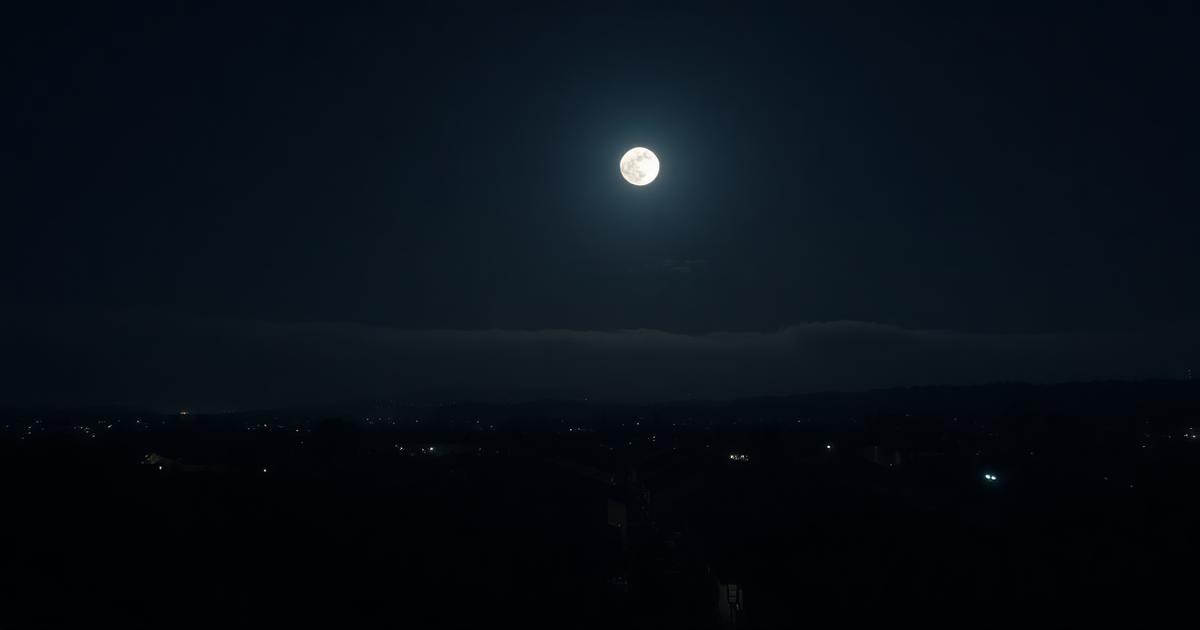
I'll admit it: for years I dismissed the idea that the moon could affect sleep as pure folklore. Then I read the 2013 study from the University of Basel published in Current Biology, where researchers found that around the full moon, participants took five minutes longer to fall asleep, slept twenty minutes less, and had 30% less deep sleep — even in a windowless lab with no moonlight exposure. That study changed my perspective entirely and sent me down a rabbit hole exploring how each of the eight lunar phases might influence the way we sleep.
The 29.5-Day Lunar Cycle
The moon completes one full orbit around Earth every 29.53 days (the "synodic month"). As it orbits, the angle between the sun, moon, and Earth changes, creating the familiar phases we see in the night sky. This same cycle has governed human timekeeping for millennia — the word "month" itself derives from "moon."
What's less obvious is how this cycle connects to biology. Before electric lighting, moonlight was the primary source of nighttime illumination. Our ancestors' sleep patterns were naturally entrained to the lunar cycle: staying up later during brighter phases (more moonlight for hunting, gathering, or socialising) and sleeping longer during darker ones. Some researchers believe this ancient programming still echoes in our biology today.
The 8 Lunar Phases & Your Sleep
One full cycle = 29.5 days
days
New Moon
Days 0–1
Darkest nights of the cycle. Two studies find the longest sleep here.
Waxing Crescent
Days 2–6
Still very dark after dusk. No measured effect on sleep either way.
First Quarter
Days 7–8
Moderate evening moonlight. No reliable sleep effect has been shown.
Waxing Gibbous
Days 9–13
Bright late into the evening — the phase where a dark bedroom matters.
Full Moon
Days 14–15
The only phase with repeated findings: ~20 min less sleep on average.
Waning Gibbous
Days 16–20
Moon rises later, so early evening is dark again. No phase-specific data.
Last Quarter
Days 21–22
Moonlight arrives after midnight. No phase-specific data.
Waning Crescent
Days 23–29
Nights nearly as dark as the new moon. Sleep measures return to baseline.
Phase-by-Phase: What the Research Shows
🌑 New Moon (Days 0–1)
The new moon phase coincides with the darkest nights. A 2021 study published in Science Advances by researchers at the University of Washington tracked sleep in both indigenous Argentinian communities (with limited electric light) and urban Seattle college students. In both groups, participants slept the most and went to bed earliest around the new moon — suggesting this pattern persists regardless of modern lighting.
From a hormonal perspective, this makes sense. Darkness stimulates melatonin production. With no moonlight competing, your body's natural "sleep now" signal is at its strongest.
🌒 Waxing Crescent (Days 2–6)
As the slender crescent appears, nighttime brightness increases gradually but remains minimal. No study has isolated a sleep effect for this phase specifically; the honest summary is that it sits in the dark half of the cycle, where the two datasets above show the longest sleep.
This is an excellent window to establish or reinforce your sleep hygiene habits while your body is naturally primed for good rest.
🌓 First Quarter (Days 7–8)
The half-lit moon rises around noon and sets around midnight, providing moderate evening illumination. There is no reliable evidence that this phase changes sleep. Consumer-tracker datasets occasionally report small dips around the quarters, but those analyses are uncontrolled and have not been replicated in laboratory work. Treat the quarters as neutral.
🌔 Waxing Gibbous (Days 9–13)
Most of the moon's face is now illuminated, and it's visible well into the late evening. If your bedroom gets moonlight, this is when blackout curtains or an eye mask start to matter. Even modest ambient light — as little as 5 lux — has been shown to suppress melatonin production and reduce slow-wave sleep.
🌕 Full Moon (Days 14–15)
This is where the strongest evidence lives. The landmark 2013 Basel study (Cajochen et al.) is the most widely cited. In their controlled laboratory setting — no windows, no knowledge of moon phase — participants showed:
- 30% less deep sleep (measured by EEG delta activity)
- 5 minutes longer to fall asleep
- 20 minutes less total sleep
- Lower evening melatonin levels
- Subjectively poorer sleep quality
The 2021 University of Washington study confirmed this pattern in real-world conditions. Even among urban students with ample artificial light, bedtimes were latest and sleep duration shortest around the full moon. The researchers proposed that the bright moonlit hours after dusk may have historically provided useful activity time, and our bodies still respond to that cycle.
Cultural associations reinforce the full moon's reputation: emergency rooms report more activity (though rigorous studies are mixed), and the word "lunatic" — from luna, Latin for moon — reflects centuries of folk belief linking full moons to restlessness.
🌖 Waning Gibbous (Days 16–20)
After the peak, the moon begins to shrink and rises later each night, so the early evening is dark again. That is the mechanism worth caring about — light at your eyes before bed, not the phase name. No study reports a distinct sleep signature for the waning gibbous itself.
🌗 Last Quarter (Days 21–22)
The half-moon now rises around midnight, so it's only illuminating the sky during the second half of the night. For most people this is less disruptive since the critical "fall asleep" window happens in darkness. If you're a very early riser, however, the pre-dawn moonlight could theoretically affect the final REM-heavy sleep cycles.
🌘 Waning Crescent (Days 23–29)
A thin sliver visible only in the pre-dawn sky. Nights are nearly as dark as during the new moon, and the measures reported in the studies above return to baseline. Folk traditions attach meanings to this phase — dreams, introspection, letting go — but those are cultural, not findings, and we make no claim for them here. If you want something that demonstrably helps at bedtime, use a slow breathing practice instead.
Why Does the Moon Affect Sleep Without Moonlight?
The most intriguing aspect of this research is that lunar effects appear even in controlled settings without moonlight exposure. Several hypotheses have been proposed:
- Gravitational influence: Speculative and unsupported. The moon raises ocean tides, but the tidal force on a human body is vanishingly small and no plausible mechanism linking it to brain chemistry has been demonstrated. We include it only because it is the explanation readers ask about most.
- Geomagnetic variation: The moon's position modulates Earth's magnetic field slightly. Some animals navigate by magnetic fields, and humans have magnetoreceptor proteins — but evidence for sleep effects is preliminary.
- Evolutionary entrainment: The leading hypothesis. Over hundreds of thousands of years, humans evolved internal circalunar clocks (similar to circadian clocks) that persist even without environmental moonlight cues.
- Social synchronisation: A 2021 paper proposed that in ancestral environments, full-moon nights were brighter and safer for social activity, and our biology still carries that predisposition to stay up.
Practical Tips: Sleeping With the Moon
You can't change the moon's phase, but you can work with it rather than against it:
- Track your patterns: Keep a simple sleep diary noting the moon phase. After 2–3 months you'll know if you're personally sensitive to the lunar cycle.
- Prepare for the full moon: In the 3–4 days around the full moon, add extra buffer time before bed. Start your breathing exercises or wind-down routine 15 minutes earlier than usual.
- Control your light: Blackout curtains matter most during the waxing gibbous and full moon phases when ambient moonlight is strongest. Even in cities, reflected moonlight adds to overall brightness.
- Use the new moon advantage: Schedule important events, exams, or demanding work days after a new-moon night when you're most likely to have slept deeply.
- Be sceptical but curious: Individual variation is huge. Not everyone is equally sensitive to lunar effects. The research shows population-level trends, not guarantees.
The Moon on NappyTi.me
You may have noticed the moon phase display on our homepage calculator. It's there as more than decoration — it's a gentle reminder that sleep isn't just about alarm clocks and 90-minute cycles. It's connected to natural rhythms that have shaped human rest for millennia. Click the moon icon to see tonight's specific phase and what it means for your sleep.
Whether you're a total sceptic or you swear the full moon keeps you up, the research is clear that something about the lunar cycle correlates with measurable changes in human sleep. Understanding that cycle puts one more tool in your hands for sleeping smarter.
References
- Cajochen, C., et al. (2013). "Evidence that the Lunar Cycle Influences Human Sleep." Current Biology, 23(15), 1485–1488.
- Casiraghi, L., et al. (2021). "Moonstruck sleep: Synchronization of human sleep with the moon cycle under field conditions." Science Advances, 7(5).
- Smith, M., et al. (2014). "Human sleep and cortical reactivity are influenced by lunar phase." Sleep Medicine, 15(11).
- Della Monica, C., et al. (2015). "Effects of lunar phase on sleep in men and women." Sleep Medicine, 16(5), 1411–1416.
This article is for educational purposes only and is not medical advice. See our editorial standards.