
Written & reviewed by Cory B., founder of NappyTi.me
Researched and fact-checked against peer-reviewed sleep studies, government health agencies (NIH, CDC), and established medical references (AASM, Sleep Foundation). Educational content — not a substitute for professional medical advice. See our editorial policy and methodology.
Morning Light and Sleep: Your Most Powerful Circadian Anchor
This guide is written for educational purposes using published sleep research and major medical references where possible. It is not medical advice. Review our editorial standards.
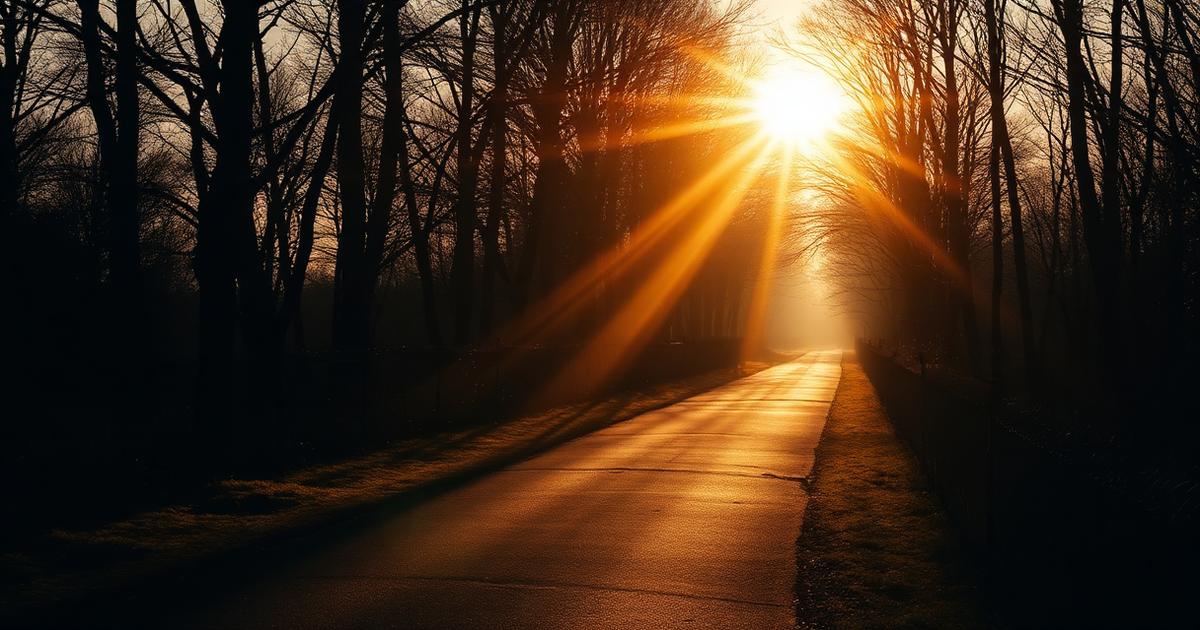
If I could only give one piece of sleep advice — and cross out every other habit on the list — it would be this: get direct outdoor light in your eyes within the first hour of waking up. Nothing else I've tried, including cutting caffeine, buying a mattress, or blackout curtains, moved the needle as much as the boring free habit of stepping outside in the morning.
What morning light actually does
Your body clock (the suprachiasmatic nucleus, tucked behind your eyes) runs on a cycle slightly longer than 24 hours. Without a daily reset, it drifts later every day — which is why weekend late nights make Mondays feel brutal. The dominant reset signal is bright light entering the eyes, and morning is when your clock is most responsive to it.
Morning light does three specific things: it shuts off melatonin production so you feel alert, it locks in the timing of your next melatonin release about 14 hours later (that's your bedtime), and it raises daytime cortisol at the correct hour instead of at 3 AM. That last one is why chronically light-deprived people so often report waking up anxious in the middle of the night.
How much light, and when
The best time to wake up is only half the equation — the light exposure that follows is the other half. Practical numbers, drawn from published circadian research:
- Timing: within 30–60 minutes of waking. Later still helps, but the effect on tonight's melatonin release is strongest early.
- Duration: 5–10 minutes on a clear sunny day. 15–20 minutes on an overcast day. 30+ minutes on a heavy-overcast winter day.
- Intensity: outdoor light on a cloudy morning is still ~10,000 lux. The brightest office ceiling light is ~500 lux. This is why a window doesn't count the same as a walk.
- No sunglasses: UV protection is important later, but the morning dose needs to reach your eyes. Don't stare at the sun — you don't need to.
Why a window is not enough
Glass filters most of the wavelengths that signal "daytime" to the brain, and drops the effective lux by 50–90%. Sitting near a bright window is far better than sitting in a dim interior room, but it's not equivalent to being outdoors. If you truly cannot get outside (nightshift sleeper, disability, extreme climate), a 10,000-lux light therapy box used for 20–30 minutes right after waking is the researched substitute.
Building the habit into a real morning
The reason morning light fails as an intervention isn't the science — it's that most adults check their phone before they check the sun. A version that actually sticks:
- Set your alarm five minutes earlier than you think you need to.
- Leave your phone charging out of the bedroom, or at least face down.
- Walk outside with water or coffee. No screens for the first 10 minutes.
- If you can pair it with something else you already do — walking the dog, taking out the trash, watering plants — the habit compounds.
Common mistakes
Getting light too late
Bright outdoor light at 11 AM still helps mood and alertness, but its effect on tonight's bedtime is a fraction of what it would have been at 7 AM. If mornings are impossible, pair mid-morning light with strict evening dimming instead.
Missing the evening half
Morning light and evening dimness are two sides of the same signal. Overhead LEDs at 11 PM undo the morning walk. Switching to warm, low lamps after sunset — and treating screens the way we cover on our screen time and sleep guide — multiplies the morning effect.
Assuming it takes weeks
Most people notice easier wake-ups within 3–5 days. If nothing has shifted in two weeks, something else (late caffeine, alcohol, an untreated sleep disorder) is competing with the signal. See our sleep hygiene checklist for the usual suspects.
The one-line summary
Ten minutes of outdoor light in the first hour after waking is the cheapest, most evidence-backed sleep intervention available. If you only fix one thing this month, fix this one.